plasticker-News
Anzeige

| 2026-10-22, 11:41 |

|
Gneuss: Hungary’s Kurucsai Plastic processes PET without pre-drying
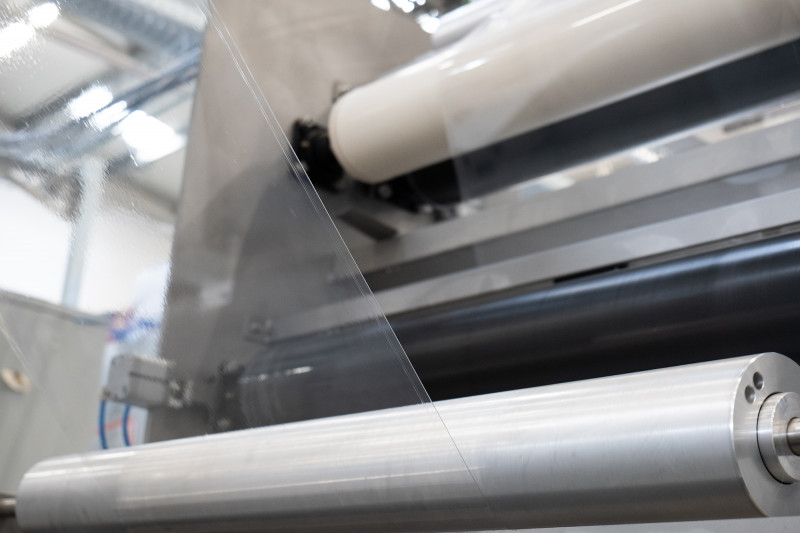 PET thermoforming sheet production at Kurucsai Plastic in Hungary – (Photo: Gneuss). Kurucsai Plastic developed from an agricultural business that initially produced thermoformed packaging for marketing its own products. The company now also supplies customers in the food industry. Alongside the expansion of its thermoforming capacity, its sheet production has increasingly been converted to PET. Among the main drivers were growing requirements for packaging recyclability and for the use of recycled content as part of the European circular economy. Advert By processing a range of PET feedstocks, the company also aims to reduce its dependence on individual material sources. In addition to virgin material, it intends to process bottle flakes and in-house production scrap. This gives Kurucsai Plastic greater flexibility in responding to fluctuations in raw material availability and pricing.
A key challenge in PET processing is the material’s tendency to absorb moisture. PET is hygroscopic and takes up water from the surrounding air. In conventional extrusion processes, an upstream drying stage is therefore generally required. Residual moisture can cause degradation of the polymer chains during processing, adversely affecting the mechanical and optical properties of the sheet. Controlled material preparation is therefore particularly important when recycled materials are used. 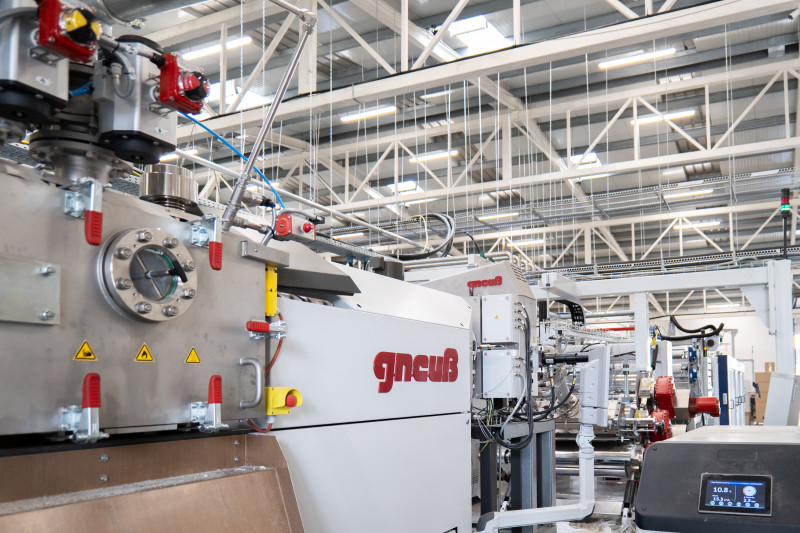 Gneuss “Omni” extrusion line with MRS extruder and RSFgenius melt filter – (Photo: Gneuss). The Multi Rotation System, or MRS, is based on a main screw incorporating several rotating satellite screws. This arrangement significantly increases the surface area of the polymer melt. Under vacuum, moisture, volatile components and other contaminants can be removed from the melt. The intensive devolatilisation process enables PET to be processed without an upstream drying system. According to the machinery manufacturer, the process used is approved by the US Food and Drug Administration for processing recycled PET into materials intended for food contact. An assessment by the European Food Safety Authority has also been applied for in relation to the customer-specific process. A decision is expected during 2026. Corresponding approval would make it easier to use the processed recycled material for food packaging in additional markets. 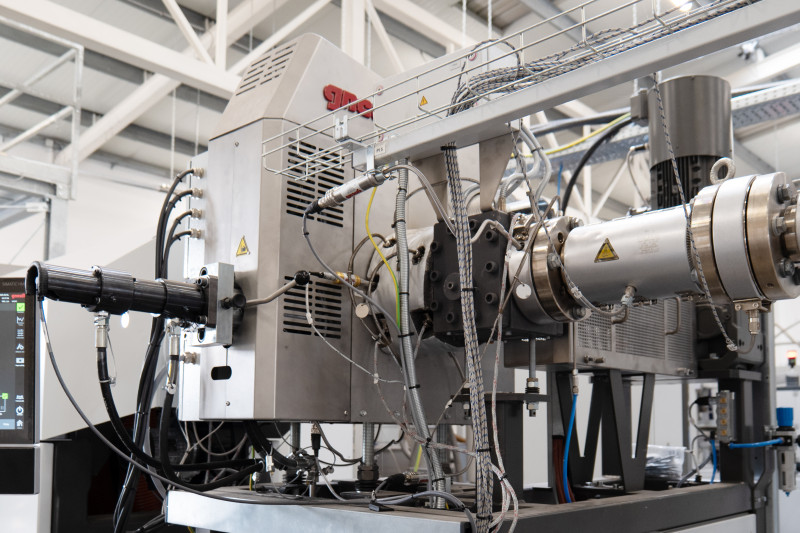 RSFgenius rotary filtration system with integrated backflushing – (Photo: Gneuss). Following extrusion, the PET sheet is fed directly to the thermoforming lines. This inline process eliminates additional steps for intermediate storage and reheating. Some of the heat introduced during extrusion can therefore be utilised in the subsequent forming process. Since commissioning in early 2025, the line has been operating under normal production conditions. Eliminating separate material pre-drying and transferring the sheet directly to downstream processing reduces both equipment requirements and the overall energy demand of the process. At the same time, the system broadens the range of feedstocks that can be processed. Kurucsai Plastic therefore now has the technical basis for gradually adjusting the proportion of recycled PET used in its food packaging. The combination of devolatilisation, melt filtration, gravimetric dosing and inline thermoforming is intended to maintain consistent sheet quality even when material compositions vary. More information: gneuss-mc.com, www.gneuss.com, kurucsaiplastic.hu |
Gneuss Kunststofftechnik GmbH + Gneuss MC GmbH & Co. KG, Bad Oeynhausen, Germany
 back to news list | back to top |
Anzeige