plasticker-News
Anzeige

| 2026-03-31, 06:06 |

|
BASF: New Verbund site in Zhanjiang officially commissioned
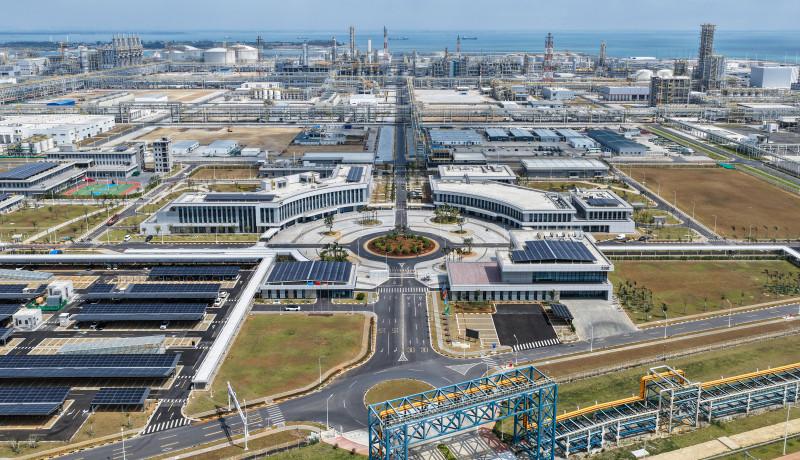 Aerial view of the BASF production site in Zhanjiang - (Photo: BASF). In Zhanjiang, BASF produces a broad portfolio of basic chemicals, intermediates, and specialty chemicals. These products are intended for a range of customer industries, including transportation, consumer goods, electronics, household cleaning, and personal care. The majority of production is destined for customers in China, in line with BASF’s “local-for-local” approach. Advert According to the company, the investment amounted to around €8.7 billion. The project was completed on schedule and significantly below the budget originally projected. BASF announced the project in 2018 and laid the foundation stone in 2019. The first production plant for engineering plastics started operations in 2022, followed by a thermoplastic polyurethane plant in 2024. At the turn of 2025/2026, production began in the first integrated value chains, while the steam cracker was also brought on stream.
According to BASF, the site is fully powered by electricity from renewable sources. This is based on long-term power purchase agreements as well as investments in an offshore wind farm. BASF states that the site’s CO2 emissions can be reduced by up to 50 percent compared with a conventional petrochemical site through Verbund integration, process innovations, and the use of renewable energy. A key facility at the site is the “flex-feed” steam cracker, which has an annual ethylene capacity of one million metric tons. It can process different feedstocks such as naphtha and butane. BASF says it is the world’s first cracker whose main compressors are powered entirely by renewable electricity. According to the company, 18 plants have so far been ramped up in Zhanjiang, 32 production lines have been commissioned, and more than 70 products have been transferred into production. The portfolio covers the Chemicals, Materials, and Nutrition & Care segments. In this context, BASF points to the integrated Verbund structure, which enables close interlinking of material flows and value chains. With the plant in Zhanjiang, BASF now has seven Verbund sites worldwide. After Ludwigshafen and Antwerp, Zhanjiang is the third-largest site of this kind in the group and is operated entirely by BASF itself. BASF has been active in Greater China for more than 140 years. In addition to Zhanjiang, the company operates other major sites there in Shanghai, Nanjing, and Chongqing, as well as further production facilities across the country. In 2025, BASF says it generated sales of around €8.2 billion in Greater China and employed nearly 13,000 people there. More information: www.basf.com |
BASF SE, Ludwigshafen, Germany
 back to news list back to news list | back to top |
Anzeige