plasticker-News
Anzeige
| 2026-10-06, 06:00 |

|
Arburg: Partner Project Integrates Individual Data Matrix Codes Directly into the Injection Molding Process
 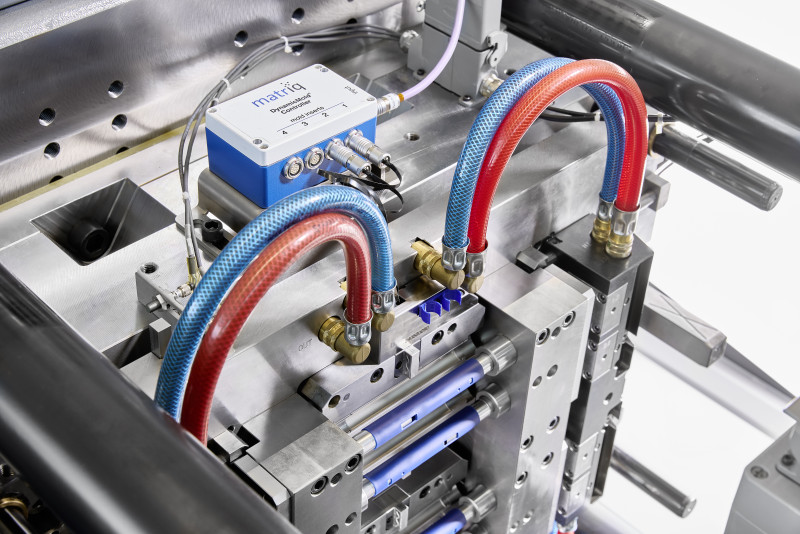 Partner project by Arburg, Matriq and Kebo at Fakuma 2026: An Allrounder 570 A produces autoinjector housings with Data Matrix codes directly in the mold – (Photo: Arburg). 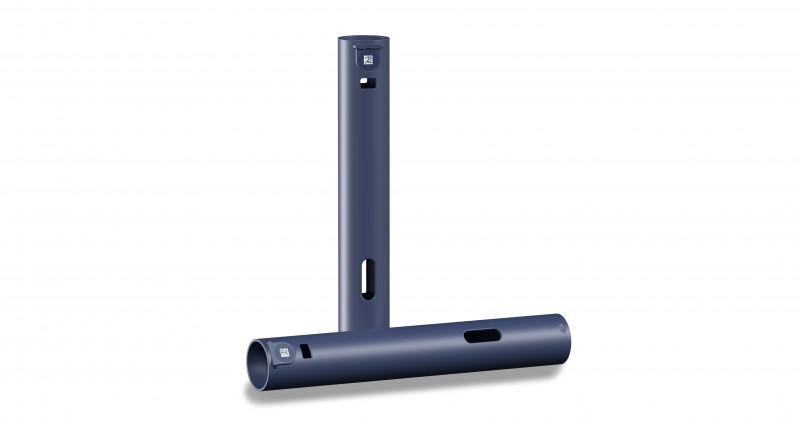 100 percent traceable: Thanks to microheaters in the mold insert, each autoinjector housing features an individual Data Matrix code made from the original material – (Photo: Arburg). The system uses an electric "Allrounder 570 A" with a clamping force of 2,000 kN in a cleanroom version. The machine produces four autoinjector housings per cycle, with a cycle time of around eleven seconds. The material processed is the medical-grade polypropylene "Bormed HG820MO" from Borouge International, colored with a masterbatch from Color Service. The system is designed for production under ISO Class 7 cleanroom conditions. The "Gestica" machine control system uses "aXw Control PressurePilot" for pressure control and stabilization of mold filling. Advert 
Kebo's four-cavity mold is based on the "Lift & Strip" concept, which is actuated mechanically via the machine ejector. A dynamic mold insert from Matriq is integrated into the cavities. It contains 144 individually controllable microheaters, each measuring 0.28 x 0.28 mm. The heating elements are activated within milliseconds and create defined geometric structures on the component surface. In this way, each molded part receives an individual Data Matrix code during the injection molding cycle. Because the marking is carried out directly in the mold, separate marking stations and additional handling steps are no longer required. According to the project partners, this can reduce cycle time, system footprint and the need for additional marking and automation technology. Traceability via Linked Production Data Traceability is based on linking the part ID, machine and measurement data, and the respective Data Matrix code generated. A central database system communicates with the "Gestica" control system and the Matriq system via an OPC UA interface. An NTP server synchronizes the system time. After production, the components can be identified by a camera system and assigned to the stored production data. Available information includes the date, shot count, injection pressure and cushion volume. This allows each component to be assigned to a specific production cycle and the associated process parameters. Geometric Marking Instead of Laser or Label Matriq generates the code using its "DM-qode" process. Unlike laser marking, the information is not created by means of color contrast, but by a locally generated geometric structure in the surface. The code consists entirely of the unchanged component material; no material removal, additional additives or consumables such as RFID tags or in-mold labels are required. According to Matriq, the process can also be used for black, transparent and highly filled plastics. As no particles are generated, the technology is designed for cleanroom applications. Matriq states that its energy consumption is approximately one twentieth that of conventional laser systems. The process is currently designed for mold temperatures of up to 100 °C; a cooling solution for the mold insert is under development. Partners and Trade Fair Presence The exhibit will be on display at Fakuma 2026 from October 12 to 16 in Friedrichshafen at the Matriq booth in Hall A4, Booth 4213. Arburg will be located in Hall A3, Booth 3101, where it will present another production cell for medical technology. Kebo will exhibit in Hall B3, Booth 3313. Borouge International will be represented in Hall A4, Booth 4218. Based in Neuhausen am Rheinfall, Switzerland, Kebo develops and manufactures high-precision injection molds and hot-runner systems for applications including medical technology, pharmaceuticals and laboratory products. The company employs around 90 people. Websites of the participating partners: Arburg: www.arburg.com Kebo: www.kebo.com Matriq: www.matriq.ch Borouge International: www.borougeinternational.com Color Service: www.color-service.de Fakuma 2026 Friedrichshafen, Germany October 12-16, 2026 Hall A3, Booth 3101 |
Arburg GmbH + Co KG, Loßburg, Germany
 back to news list back to news list | back to top |
Anzeige