plasticker-News
Anzeige
| 2026-10-02, 06:00 |

|
Engel Unveils New All-Electric "e-motion 380" for Thin-Wall Packaging
 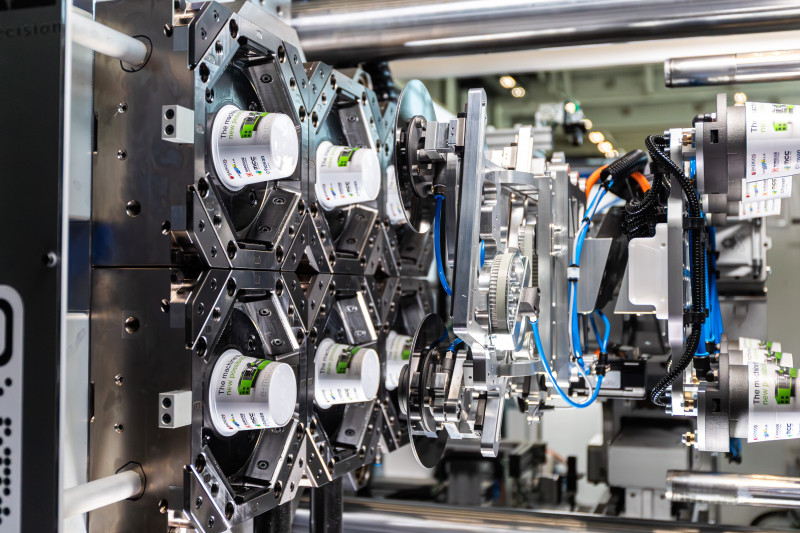 The e-motion produces yogurt cups with a wall thickness of 0.28 mm, a flow-length-to-wall-thickness ratio of 370 and a dry cycle time of as little as 1.2 seconds. According to Engel, all-electric operation typically cuts energy consumption by around 30 percent compared with hybrid or hydraulic machines - (Photo: Engel). 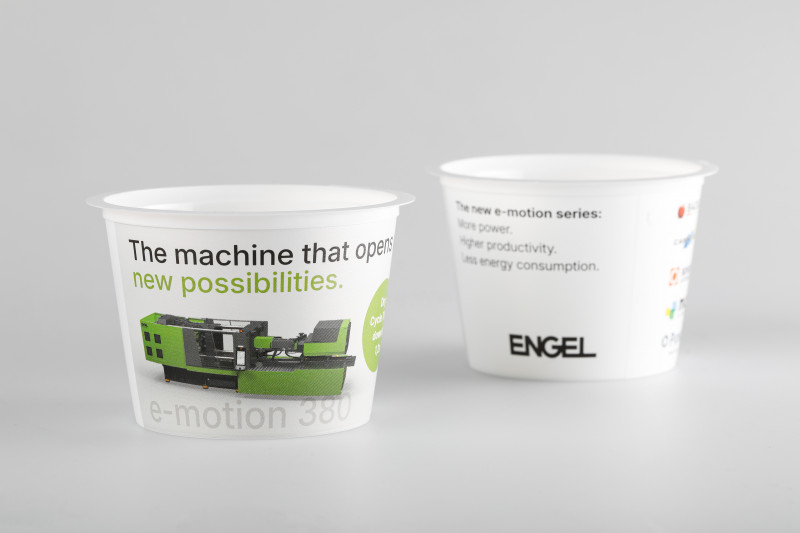 The IML yogurt cup produced on the e-motion 380 weighs just 6.33 g despite its wall thickness of only 0.28 mm - (Photo: Engel). 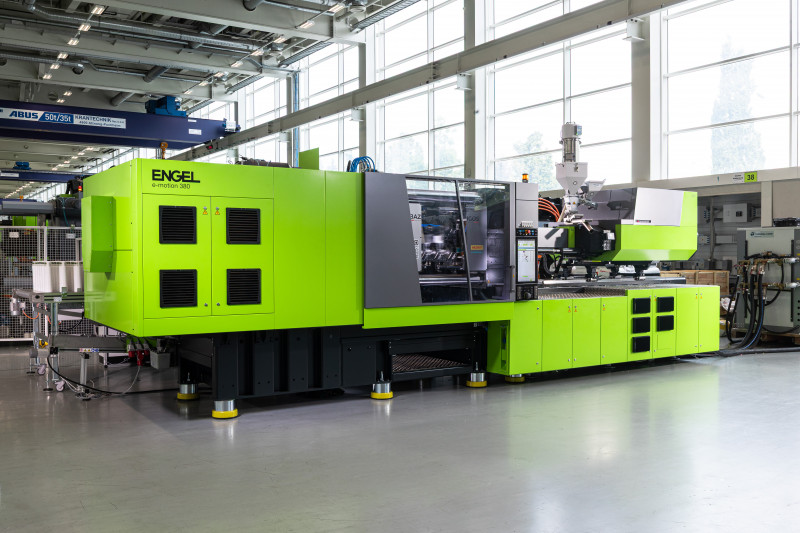 Debut at Fakuma 2026: The e-motion 380 is the first machine in the new generation. Its new injection unit reaches injection speeds of up to 500 mm/s - (Photo: Engel). For the new machine generation, Engel has redesigned both the clamping and injection units. According to the company, the "e-motion 380" achieves a dry cycle time of as little as 1.2 seconds, positioning it for packaging applications that demand short cycles and high output. The new injection unit is equipped with a 70 mm screw and delivers injection speeds of up to 500 mm/s. These performance characteristics are designed to enable the reliable processing of thin-wall packaging with long flow paths. The "e-motion 380" is the first model in the new generation. Engel plans to roll out the enhanced clamping unit across the entire "e-motion" machine series. Advert 
Focus on Energy Efficiency and Continuous Production According to Engel, all-electric injection molding machines typically consume around 30 percent less energy than comparable hybrid or hydraulic systems. In high-volume production, this reduction in energy demand can have a noticeable impact on unit costs. Alongside short cycle times, the machine series is designed for continuous 24/7 operation in packaging production. Engel had previously demonstrated all-electric thin-wall processing at K with a PET application using a compression molding process. With the new machine generation, the company is now extending the technology to conventional polypropylene thin-wall packaging for dairy products and other food applications. IML Cell with Side-Entry Robot In the production cell on display at Fakuma, a side-entry robot removes all six cups from the mold while simultaneously inserting the labels for the next injection molding cycle. The short cycle times place high demands on the acceleration and deceleration performance of the automation system. The IML automation is supplied by "Campetella", while the six-cavity mold comes from "Bazigos". "MCC Verstraete" supplies the labels. The polypropylene is provided by "Borouge International", formed in 2026 through the combination of Borealis, Borouge and Nova Chemicals. Material handling for the production cell is supplied by "Piovan". Engel integrates all individual components into a complete production cell and can assemble, test and hand over the full system, including automation, at its own facility. Fakuma 2026 Friedrichshafen, Germany October 12–16, 2026 Hall A5, Booth 5203 More information: engelglobal.com |
Engel Austria GmbH, Schwertberg, Austria
 back to news list back to news list | back to top |
Anzeige