plasticker-News
Anzeige

| 2026-08-26, 06:00 |

|
Lifocolor: Masterbatch Solutions for Material Changes, Recyclability and EU Compliance
 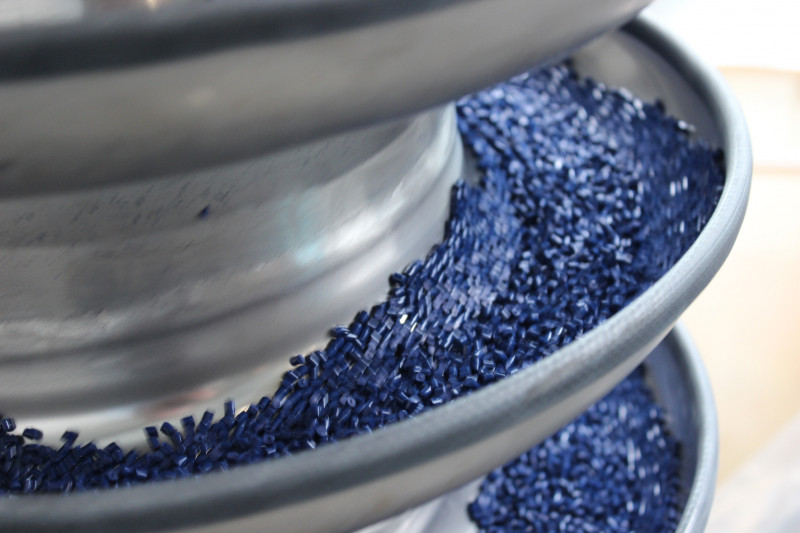 Increasing regulatory and functional requirements are making the development of masterbatches increasingly complex. At Fakuma 2026, Lifocolor will present new additions to its portfolio tailored to specific needs – (Image: Lifocolor). The background to these developments is a number of regulatory changes that will become relevant to manufacturers, processors and suppliers in 2026. These include the application of the EU Packaging and Packaging Waste Regulation (PPWR) from August 12, 2026, regulations concerning PFAS and bisphenol A, and the end of the transitional period for amending Regulation (EU) 2025/351 on September 16, 2026. In addition to packaging design and documentation, the regulations also affect the material composition of plastic products and the additives used. Advert 
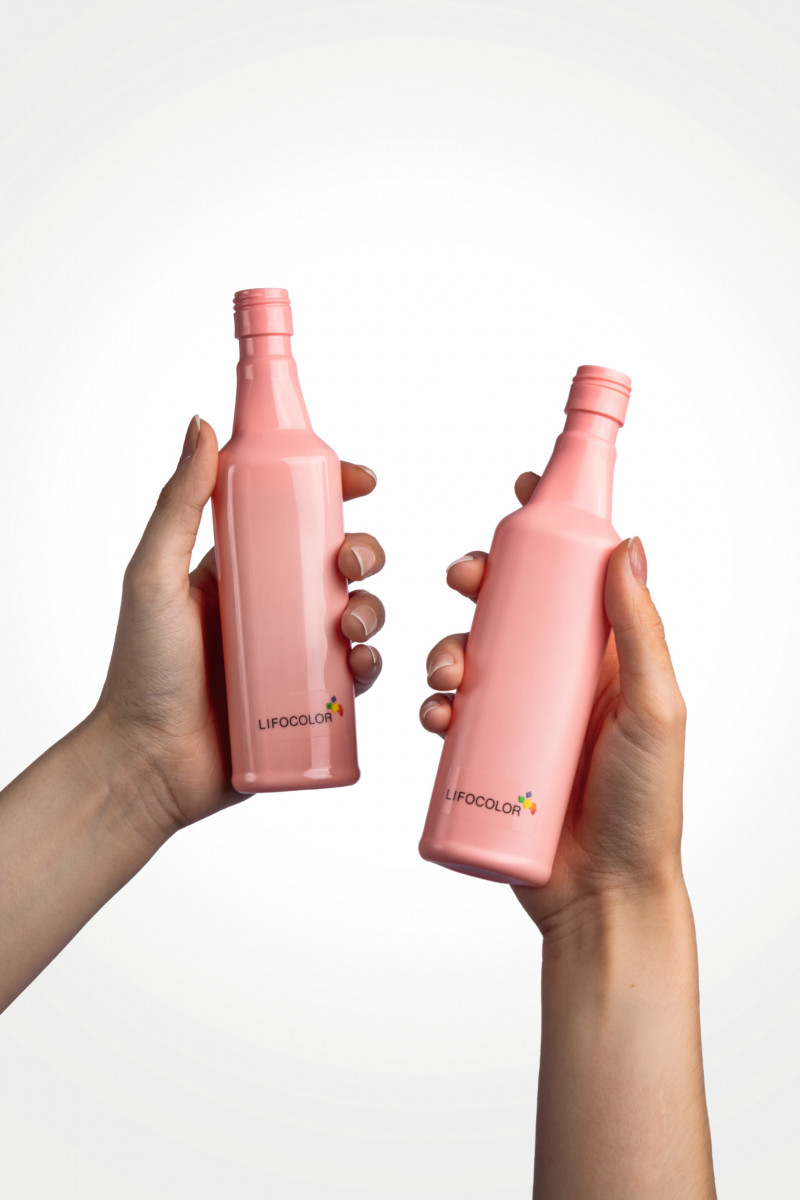 Velvet PET from Lifocolor gives PET bottles a velvety matte feel similar to HDPE – (Image: Lifocolor). With Velvet PET, Lifocolor is showcasing an additive masterbatch that gives PET bottles a velvety matte surface and a grip reminiscent of HDPE bottles. The solution is aimed at applications including cosmetics, personal care, food and pharmaceuticals. The masterbatch is designed to support material changes from HDPE to PET where a comparable sensory effect is to be retained. This allows corresponding packaging concepts to be implemented as PET monomaterial solutions. According to the company, Velvet PET can be processed on existing injection stretch blow molding (ISBM) lines and is intended for food-contact applications. Black Plastics for NIR Sorting and Laser Marking Another focus is on black masterbatches that can both be detected using near-infrared technology and marked by laser. Conventional carbon-black-based colorants often make it difficult for packaging to be detected in automated sorting systems. NIR-detectable formulations, by contrast, are designed to enable dark plastic parts to be identified during recycling and assigned to the appropriate material streams. Combining NIR detectability with laser markability also enables permanent labeling without additional printing inks or labels. This brings together two requirements in a single masterbatch formulation: machine sortability and direct marking of the component or packaging. Lifocolor will also showcase NIR-detectable silver masterbatches for metallic surfaces as well as additional laser-marking solutions. Its PPWR-related portfolio also includes color masterbatches for recycling-oriented packaging concepts, products for color correction in recycled PET and masterbatches for protecting packaged contents. The latter can be based on recycled carrier materials. Restructured Portfolio for Food-Contact Applications In connection with amending Regulation (EU) 2025/351 concerning the EU Plastics Regulation (EU) No 10/2011, Lifocolor has structured its portfolio for food-contact applications according to different requirement profiles. For sensitive applications involving direct food contact, the portfolio includes masterbatches made with appropriately qualified raw materials and supported by extended compliance documentation. Separate solutions are offered for less sensitive consumer articles that are still intended to meet the fundamental requirements of European Framework Regulation (EC) No 1935/2004 and the Plastics Regulation, but do not necessarily require the full scope of additional documentation in every case. The structure is intended to enable application-specific product selection. Product safety, documentation requirements and economic considerations are evaluated according to the specific conditions of use. The aim is to determine the required level of compliance for each application rather than applying the highest documentation requirements to all applications as a matter of principle. Effect Masterbatches for Packaging and Consumer Goods For decorative applications, Lifocolor will present several effect solutions. These include a holographic effect that uses coated glitter pigments to create an iridescent appearance with visual depth. Another product group is the Granite Effect family, which produces surface appearances resembling materials such as sandstone or cork. The range is complemented by various metallic looks. The effect masterbatches are intended for food-contact applications and, depending on the formulation and processing method, can be used at temperatures of up to 280 or 300 degrees Celsius. At Fakuma 2026, the company will also provide a first preview of a trend color line planned for 2028. Color samples and materials from the “Shades of Inspiration 2027” collection will also be on display. Formulations for Engineering Polymers and Sensitive Applications In addition to packaging and consumer goods applications, the portfolio includes masterbatches for engineering plastics. Lifocolor develops formulations for styrenic plastics, copolyesters, polycarbonate, polyamide, polymethyl methacrylate, polyoxymethylene, polybutylene terephthalate and polyphenylene sulfide, as well as various polymer blends. Polymer-identical carrier materials can be used in these formulations. Such formulations are designed to improve compatibility between the masterbatch and the plastic being processed while limiting undesirable changes to the material's properties. For products subject to increased requirements regarding purity, hygiene and process control, including toys, food, medical and pharmaceutical applications, Lifocolor manufactures according to its own GMP-oriented production concept. This includes defined hygiene measures, analytical testing and change-management agreements. Pigment Concentrates for Compounders and Recyclers Lifocolor also offers mono-concentrates, or single-pigment concentrates, for compounders and recycling companies. Each contains an individual pigment in concentrated form and can be used as the basis for proprietary color formulations. The concentrates allow processors to adjust colors flexibly. This is particularly relevant for recyclates, where the initial color and material quality can vary from batch to batch. By dosing individual pigments separately, such variations can be compensated for more precisely. Fakuma 2026, Friedrichshafen, Germany, October 12–16, 2026, Hall A4, Booth 4206 More information: www.lifocolor.de |
Lifocolor Farben GmbH & Co. KG, Lichtenfels
 back to news list back to news list | back to top |
Anzeige