plasticker-News
Anzeige

| 2026-10-06, 06:00 |

|
EMS-Grivory: High-performance polyamide replaces aluminum in ABS solenoid valve for commercial vehicles
 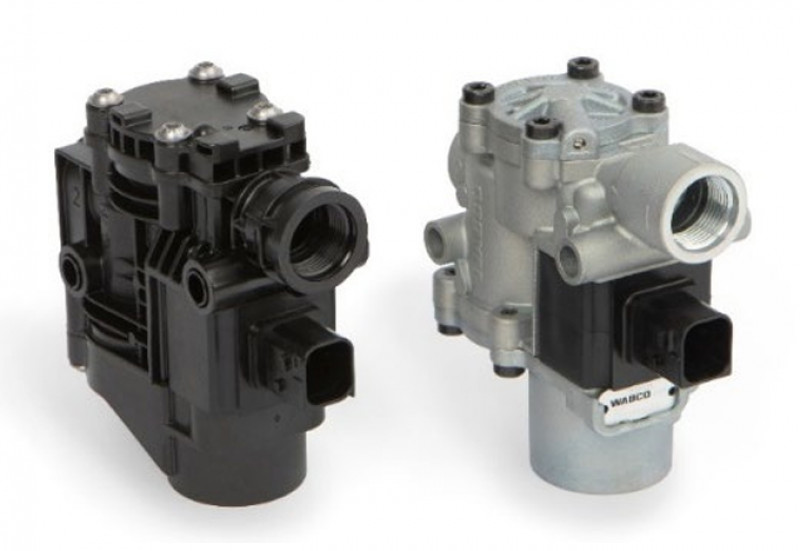 Comparison of the previous aluminum version with the new EMS polymer solution - (Photo: EMS-Grivory). The solenoid valve forms part of an ABS modulator and controls the air pressure supplied to the brake cylinders, helping to prevent wheel lock-up under heavy braking. As a safety-critical component, it must maintain reliable performance and high fatigue resistance throughout its service life while withstanding temperatures from -40°C to +80°C as well as a range of environmental influences. Advert Injection-molding-optimized design
The switch from aluminum to "Grivory HT" also required the component geometry to be redesigned specifically for injection molding. Integrated rib structures provide the necessary stiffness, while the process allows complex geometries to be produced in a single manufacturing step. Secondary machining operations required for the aluminum version are no longer necessary. 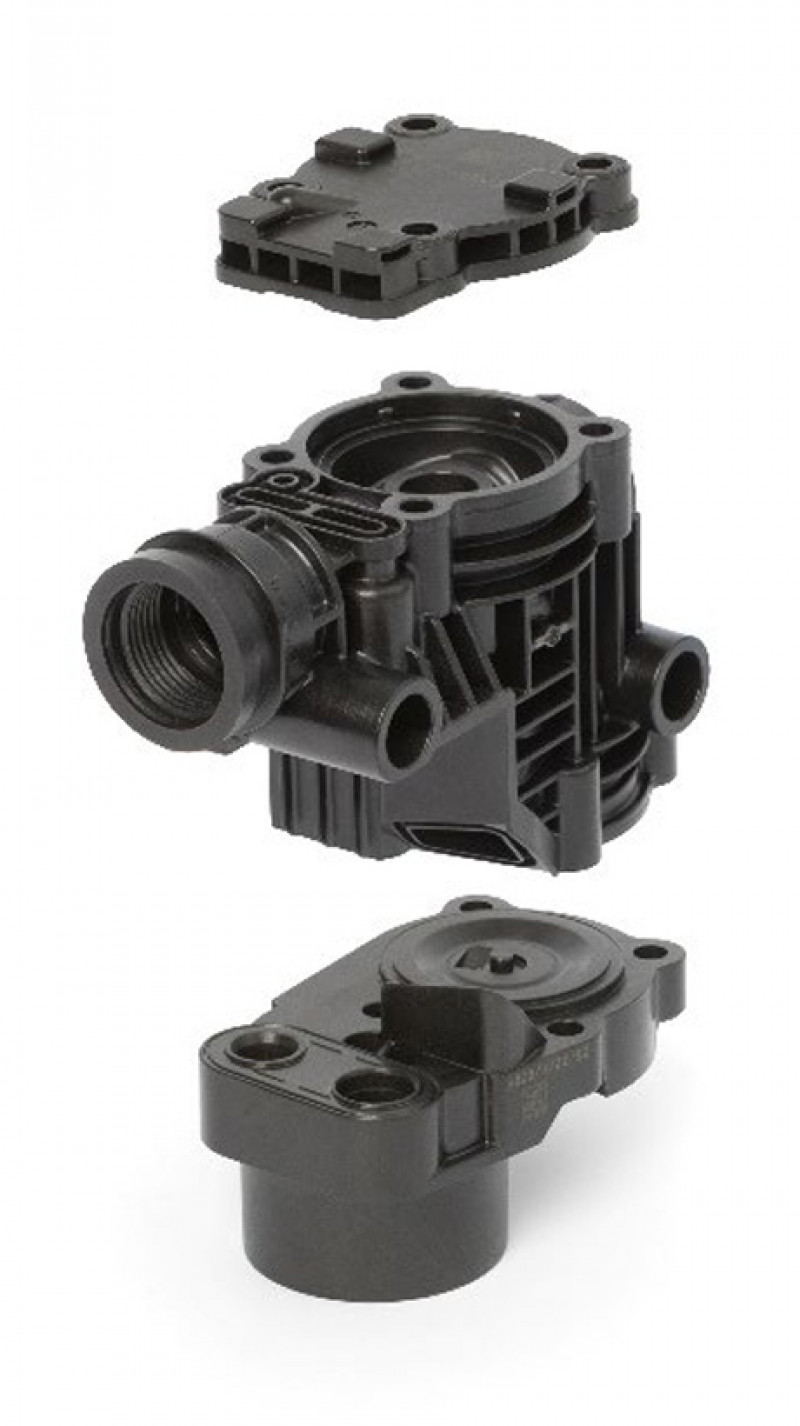 Exploded view of the ABS solenoid valve and its individual components - (Photo: EMS-Grivory). Lower processing temperature cuts energy consumption The polymer solution also offers advantages in processing. "Grivory HT" is processed at around 340°C, compared with approximately 650°C for aluminum. EMS says the lower processing temperature can reduce manufacturing energy consumption by up to 25 percent. The application illustrates the potential for engineering thermoplastics to replace metal components even in safety-critical commercial vehicle systems, provided that material selection, component design and injection molding are closely coordinated. Key benefits include lower weight, high durability, reduced energy demand and lower manufacturing costs. Fakuma 2026, Friedrichshafen, October 12-16, 2026, Hall B2, Booth 2113 More information: www.ems-group.com, www.emsgrivory.com |
EMS-Chemie Holding AG, Herrliberg and Domat/Ems, Switzerland
 back to news list back to news list | back to top |
Anzeige